 USD ($)
 INR (₹)
 SAR (SAR)
 AED (AED)

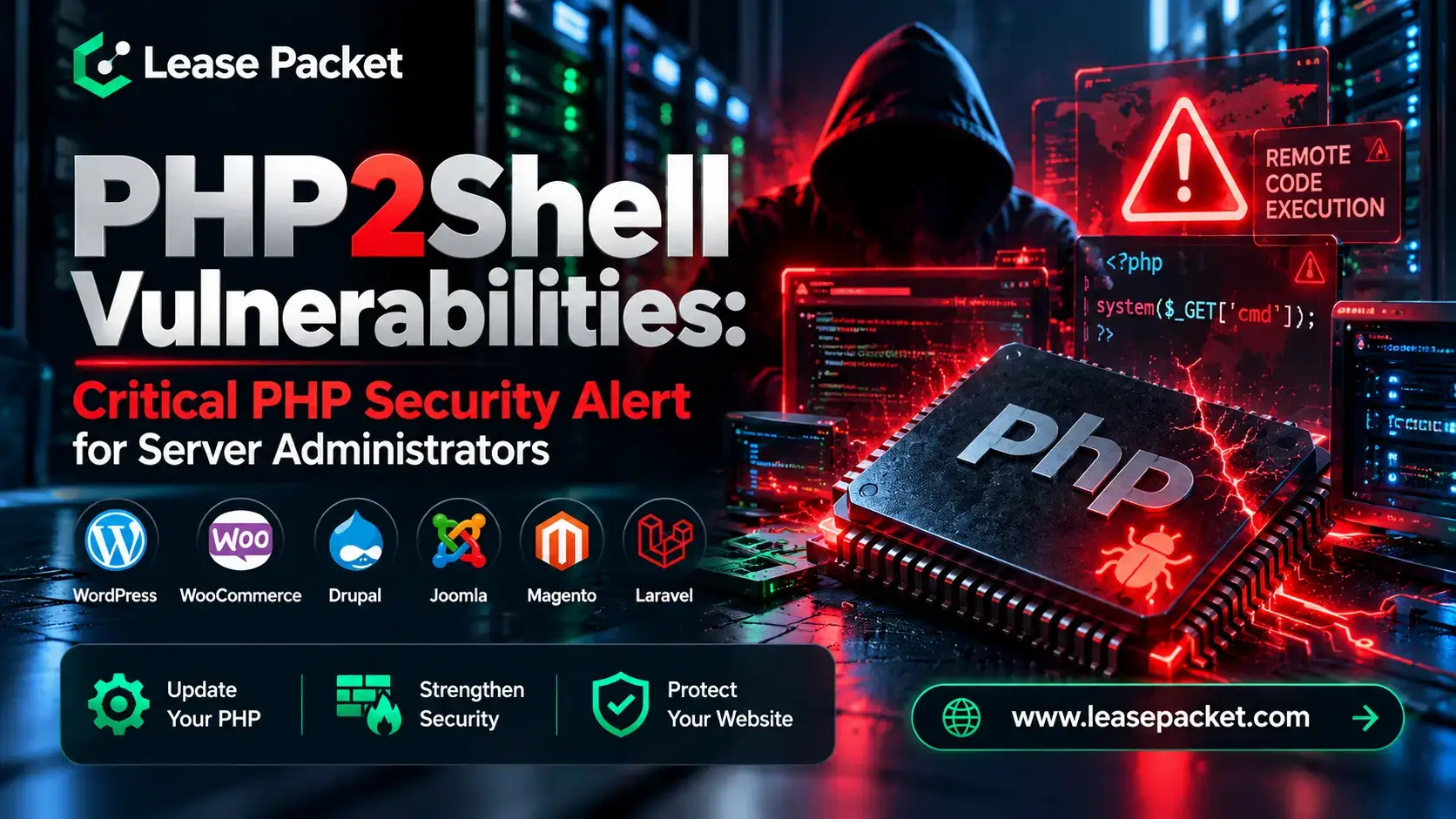
CRITICAL PHP SECURITY ALERT: PHP2Shell Vulnerabilities and How to Protect Your Website
PHP powers millions of websites and web applications worldwide, making PHP security essential for businesses operating online. Two critical vulnerabilities, CVE-2026-109618 and CVE-2026-109619, have been reported under the name PHP2Shell, raising concerns about the security of vulnerable server infrastructure.
Reported on October 21, 2026, these vulnerabilities are described as having a CVSS severity score of 9.2/10. If confirmed and applicable to your environment, they could expose vulnerable systems to serious security risks, including potential remote code execution (RCE). Server administrators and businesses should promptly verify the vulnerability details and apply appropriate security updates.
Table of Contents
What Are PHP2Shell Vulnerabilities?
PHP2Shell refers to two reported security flaws associated with the PHP runtime environment. Remote code execution vulnerabilities can allow attackers to execute unauthorized commands or code on a vulnerable system under certain conditions.
Depending on the affected PHP versions, configuration, and exploit requirements, successful exploitation could threaten website security, application availability, and sensitive business information.
Because PHP is widely used for content management systems, e-commerce platforms, APIs, and custom web applications, identifying affected systems and applying the correct security patches should be a priority.
Key Security Risks of PHP2Shell
Organizations running vulnerable PHP environments may face several potential threats:
- Remote Code Execution: Attackers may execute malicious code if the vulnerability is exploitable in the affected environment.
- Sensitive Data Exposure: Compromised applications may put customer information, credentials, and business data at risk.
- Server Compromise: Successful exploitation could provide a pathway to further unauthorized activity.
- Website Disruption: Malicious activity may affect website availability, application performance, and business operations.
- Reputational Damage: Security incidents can reduce customer confidence and create additional recovery costs.
The actual impact depends on the affected software, server configuration, permissions, and available mitigations.
PHP2Shell: Reported Patched Versions
The following PHP versions have been identified in the supplied security advisory as patched releases:
- PHP 8.5.12
- PHP 8.4.27
- PHP 8.3.36
- PHP 8.2.35
Important: Verify these version numbers and their association with CVE-2026-109618 and CVE-2026-109619 against official PHP security announcements before upgrading. Older PHP branches may require vendor-specific patches or migration to a supported release.
How to Protect Your PHP Servers
Follow these essential security measures to reduce your exposure:
- Update PHP: Identify affected versions and install the appropriate verified security patch.
- Restart PHP Services: Restart PHP-FPM, Apache, or other relevant services when required to load the updated runtime.
- Review Server Logs: Investigate unusual requests, unexpected processes, suspicious authentication activity, and unexplained resource usage.
- Update Applications: Patch WordPress, plugins, frameworks, libraries, and other dependencies.
- Strengthen Server Security: Apply least-privilege permissions, restrict unnecessary access, maintain reliable backups, and monitor server activity.
- Verify the Fix: Confirm the active PHP version and ensure the patched runtime is actually being used by production applications.
Businesses should also maintain an inventory of their servers, schedule regular security assessments, and establish a documented patch management process. These measures help identify vulnerable systems before they become a serious operational concern.
Frequently Asked Questions About PHP2Shell Vulnerabilities
What is the PHP2Shell vulnerability?
PHP2Shell is the name used in the supplied advisory for two reported PHP security vulnerabilities, CVE-2026-109618 and CVE-2026-109619. They are described as critical flaws that may enable remote code execution under applicable conditions. Administrators should verify the technical details through official security advisories.
What are CVE-2026-109618 and CVE-2026-109619?
These are the two CVE identifiers associated with the reported PHP2Shell security alert. CVE identifiers provide unique references for tracking security vulnerabilities. They help administrators, hosting providers, and security teams identify relevant advisories, determine potential exposure, and coordinate remediation.
How severe are the PHP2Shell vulnerabilities?
The supplied information lists a CVSS score of 9.2 out of 10, indicating critical-level urgency if the score is confirmed. The practical risk depends on the affected PHP release, application configuration, exposure, and exploit conditions. Organizations should prioritize verification and remediation rather than assuming every PHP server is equally vulnerable.
What is remote code execution (RCE)?
Remote code execution occurs when an attacker can run unauthorized code on a remote system. Depending on the vulnerability and the permissions of the affected process, this may lead to data exposure, unauthorized changes, service disruption, or further compromise. RCE vulnerabilities should be investigated and patched promptly.
Which PHP versions are reported as patched?
The supplied advisory lists PHP 8.5.12, 8.4.27, 8.3.36, and 8.2.35. Administrators should confirm these releases against official PHP security announcements before deployment. A patched version should be selected based on the affected branch, application compatibility, and the vendor’s recommendations.
How can I check which PHP version my server is running?
For command-line PHP, an authorized administrator can run php -v to display the installed CLI version. However, the PHP version used by a website may differ from the command-line version. Check the active PHP-FPM pool, hosting control panel, or web server configuration to verify the runtime serving the application.
Is updating PHP enough to secure my website?
Updating PHP is an important step, but it does not guarantee complete website security. Administrators should also update application frameworks, WordPress core, plugins, themes, and dependencies. Review permissions, secure administrative accounts, maintain tested backups, and monitor logs for suspicious activity.
What should I do if my PHP version is no longer supported?
Older PHP branches may not receive regular security updates. Check whether your hosting provider or software vendor offers an applicable security patch. If no suitable patch is available, plan an upgrade to a supported PHP version after testing application compatibility in a staging environment.
How can I tell whether my server has been compromised?
Possible warning signs include unexpected processes, unfamiliar files, unusual outbound connections, suspicious login attempts, unexplained resource consumption, or unexpected changes to website content. These indicators are not conclusive on their own. If compromise is suspected, preserve relevant logs, isolate affected systems where appropriate, investigate the incident, and restore from verified clean backups if necessary.
How can Lease Packet help businesses improve server security?
Lease Packet provides server and server solutions, including dedicated servers, cloud servers, VPS hosting, web hosting, and technical server support. Businesses can explore infrastructure options and seek assistance with server administration and security maintenance according to their service requirements. Visit https://www.leasepacket.com to learn more.
Secure Your Infrastructure with Lease Packet
PHP security requires more than a one-time update. Regular patch management, proactive monitoring, tested backups, and reliable server administration help businesses maintain a secure and dependable hosting environment.
Lease Packet is a server and server solutions provider offering dedicated servers, cloud servers, VPS hosting, web hosting, and technical server support. Our solutions help businesses manage their infrastructure and address evolving security requirements.
Visit https://www.leasepacket.com to explore our server solutions and find the right infrastructure for your business.
Stay Updated. Stay Protected. Secure Your Infrastructure with Lease Packet.