 USD ($)
 INR (₹)
 SAR (SAR)
 AED (AED)

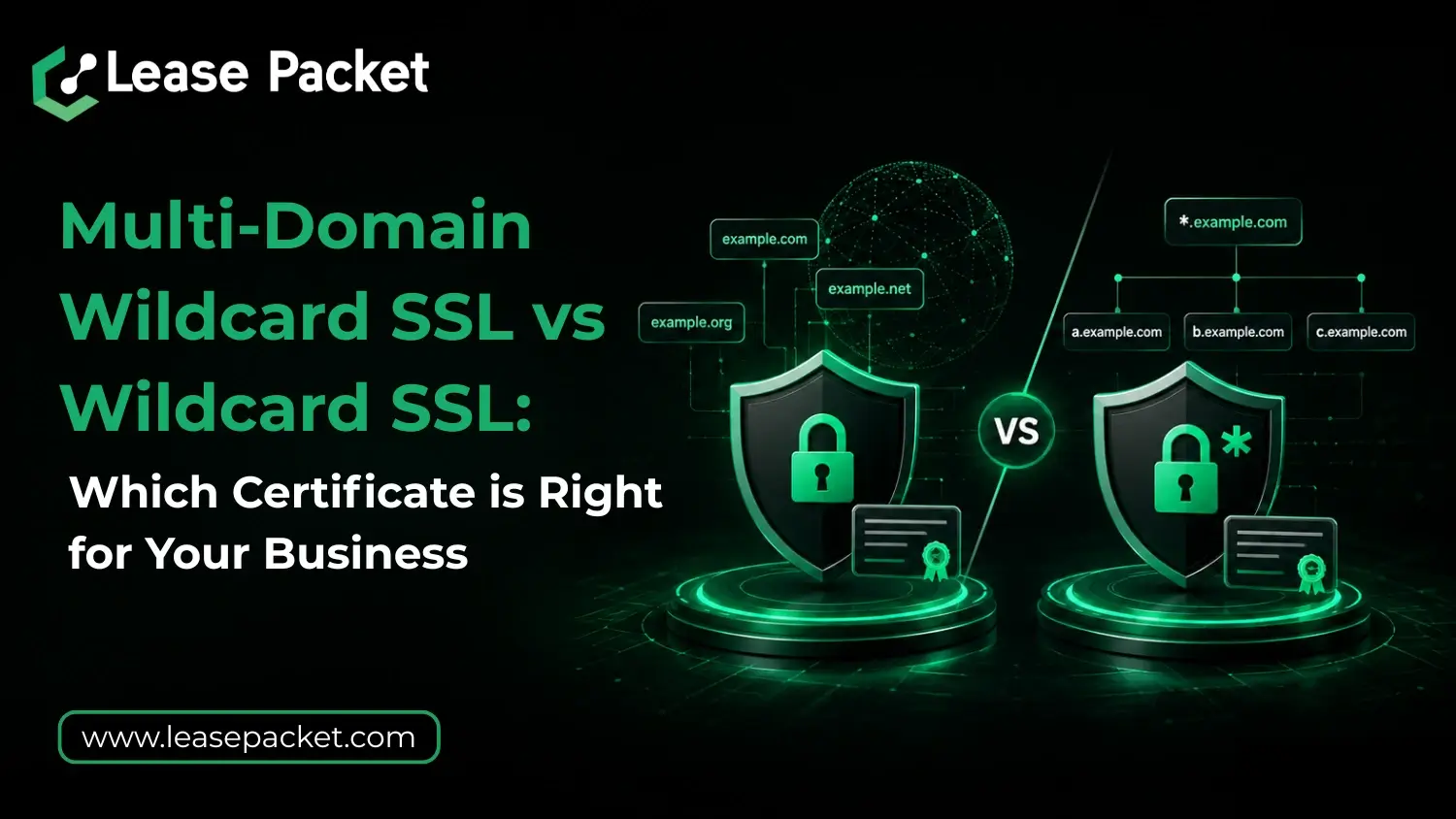
See, one thing to manage versus many things to manage simultaneously – one thing is always easier. That’s obvious. In the same way, if you have multiple SSLs to manage, SSL management becomes complicated as your online presence grows. Every website needs HTTPS encryption, yes? But if you get the wrong SSL certificate, you end up paying unnecessary costs and administrative work. Two popular & best options for growing businesses are Wildcard SSL Certificates and Multi-Domain Wildcard SSL Certificates. While both help secure multiple websites, they solve different problems. And today, we will understand the differences between them so you can make the right decision based on your needs. So, let’s begin with Multi-Domain Wildcard SSL vs Wildcard SSL.
Table of Contents
Multi-Domain Wildcard SSL vs Wildcard SSL
Wildcard SSL Certificate Definition
A Wildcard SSL Certificate secures one primary domain and all of its first-level subdomains under that domain. Now, what are first-level subdomains? Say if your main domain is – example.com – then the first-level subdomains will be anything like:
- www.example.com
- blog.example.com
- support.example.com
- mail.example.com
- portal.example.com
A Wildcard SSL secures all of them. There is literally no limit.
You never have to purchase another SSL for any subdomain; you manage everything under a single Wildcard SSL certificate. Therefore, Wildcard SSL becomes a practical choice when your services operate under one domain structure.
Wildcard SSL Requirement
A Wildcard SSL is usually suitable when:
- Your business operates from a single website domain
- You regularly create new subdomains
- You want simple certificate management
- Customer-facing services that stay under one brand
For many startups and IT agencies, a Wildcard SSL provides enough flexibility without adding complexity.
Multi-Domain Wildcard SSL Certificate Definition
A Multi-Domain Wildcard SSL takes the same concept further. Here, you don’t just secure subdomains for only one domain, but you secure multiple domains and their subdomains under a single certificate. For example, one certificate may protect:
- *.example.com
- *.example.net
- *.example.org
This means you can secure multiple websites while also covering the subdomains associated with each website. If you have several brands, then this is for you – you don’t need tons of SSLs to track and renew. You just need one.
Key Differences | Wildcard SSL vs Multi-Domain Wildcard SSL
The easiest way to understand the difference is to look at how many root domains each certificate supports.
Wildcard SSL secures:
- One primary domain
- Unlimited first-level subdomains
Example:
- example.com
- blog.example.com
- support.example.com
Multi-Domain Wildcard SSL secures:
- Multiple primary domains
- Unlimited first-level subdomains for each domain
Example:
- example.com
- blog.example.com
- example.net
- portal.example.net
- example.org
- support.example.org
The more domains you manage, the more valuable Multi-Domain Wildcard SSL becomes.
Real Business Examples of Both SSL Certificates
Suppose you run an e-commerce company with one website:
- yourstore.com
- support.yourstore.com
- payments.yourstore.com
A standard Wildcard SSL is enough for you.
Now consider a business that owns:
- yourstore.com
- yourstore.in
- yourstore.co.uk
Each domain has its own support portal, customer dashboard, and email services. In this case, you need a Multi-Domain Wildcard SSL as it allows you to secure all of them under one certificate structure.
Which SSL is Easier to Manage?
Certificate management becomes increasingly important as websites grow. With multiple individual certificates, your team must monitor:
- Renewal dates
- Installation records
- Certificate replacements
- Security updates
Missing even one renewal can trigger browser security warnings and affect customer trust. A Multi-Domain Wildcard SSL helps centralize management by reducing the number of certificates to just one, which your team can handle easily. However, if you only operate one domain, a standard Wildcard SSL remains the even simpler solution.
Cost Considerations | Wildcard SSL vs Multi-Domain Wildcard SSL
Many businesses initially choose certificates based only on price. While a Wildcard SSL generally costs less, the long-term value depends on your infrastructure, which is simple to understand. If you manage multiple domains, purchasing separate Wildcard SSL certificates for each one costs more than a Multi-Domain Wildcard SSL. In that case, just get a Multi-Domain Wildcard SSL. Actually, the right choice is not necessarily the cheapest certificate today. It is the certificate that continues to support your business as your websites expand.
How to Choose the Right Certificate
A Wildcard SSL is usually the best choice when your business operates under a single domain and frequently creates new subdomains. A Multi-Domain Wildcard SSL becomes the better option when you manage several domains and want centralized security management across all of them. Before making a decision, consider where your business will be in one or two years from now. Choosing a certificate that supports future growth can prevent unnecessary migrations and additional certificate purchases later.
Bottom Line
Both Wildcard SSL and Multi-Domain Wildcard SSL certificates provide strong encryption and help simplify website security. The difference comes down to scale. If your business runs on one domain and multiple subdomains, a Wildcard SSL is the most practical option. If you manage multiple domains, go for Multi-Domain Wildcard SSL. Lease Packet offers trusted SSL solutions with easy deployment and ongoing dedicated support. Connect with Lease Packet for quotes & queries! Offers available!!
FAQs
Is a Wildcard SSL enough for most small businesses?
Yes! If you operate a single domain and multiple subdomains, a Wildcard SSL is usually sufficient.
Can a Multi-Domain Wildcard SSL secure different domain names?
Sure. It can secure multiple root domains along with their associated subdomains.
Which certificate is better for growing companies?
Businesses planning to manage several websites or brands often benefit more from a Multi-Domain Wildcard SSL because it simplifies certificate management as infrastructure expands.