 USD ($)
 INR (₹)
 SAR (SAR)
 AED (AED)
As you are aware, the tech industry has undergone drastic changes. The infrastructure building isn’t the same anymore. What worked a few years ago can’t hold up in 2026. Your applications are heavier, your users expect instant performance, and downtime is simply not acceptable. You are now required to make some serious decisions about how your systems will scale, how your costs will behave, and how resilient your business will be under pressure. Without proper planning, your setup cannot fetch the desired results. And of course, if you are planning to buy cloud servers, understanding hybrid, multi-cloud, and AI-driven infrastructure is a must. Today, we will discuss in detail how your cloud server architecture should be to get the most out of it. Let’s start!
Table of Contents
What Modern Cloud Server Architecture Really Means in 2026
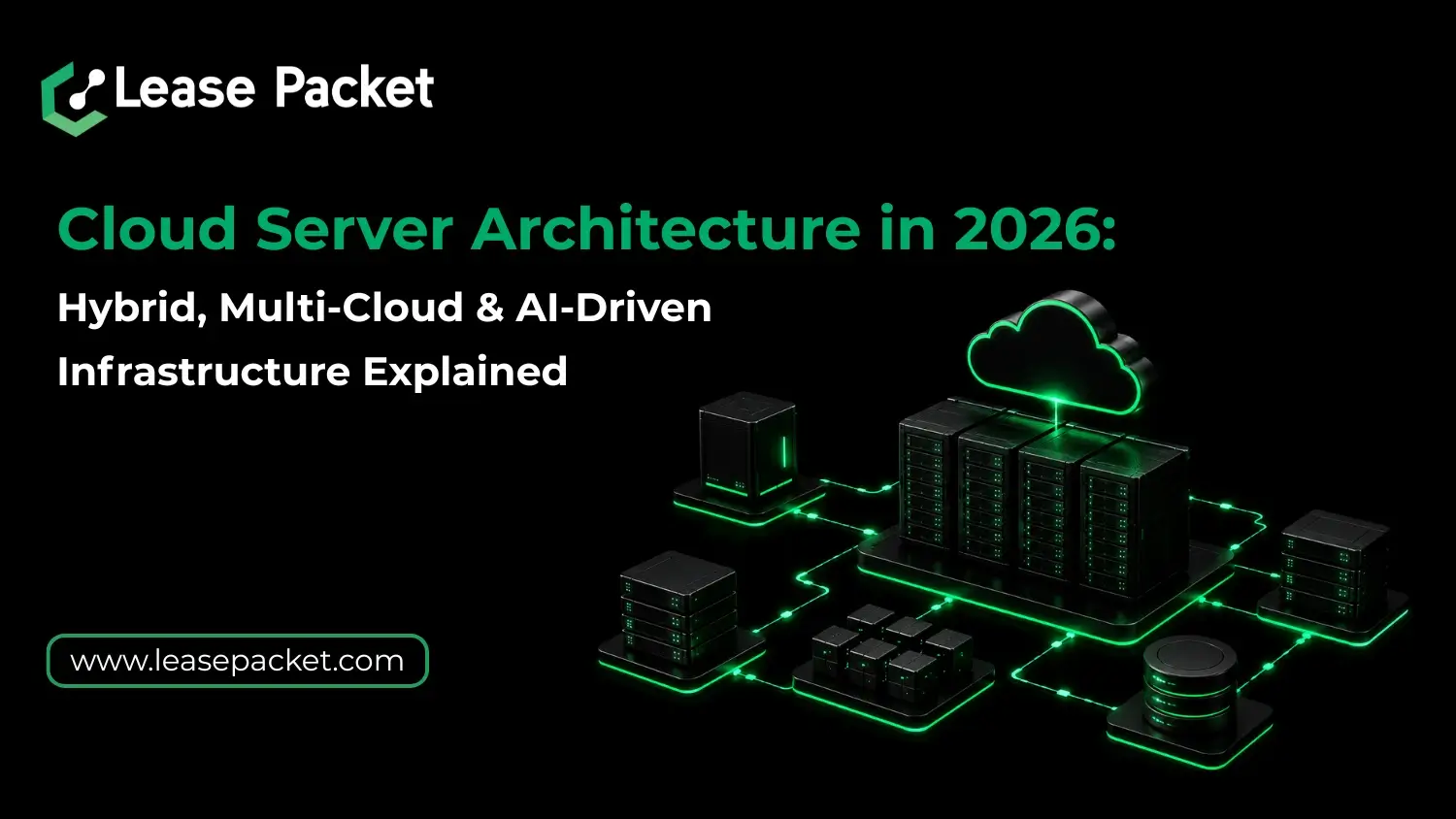
Cloud server architecture is no longer about deploying a single virtual machine on one provider. It’s about building a flexible system where workloads move, scale, and optimize themselves across environments. This includes public cloud, private cloud, edge computing, and even on-premise integration. In simpler terms, you essentially need to design a system where your cloud servers communicate intelligently rather than working in isolation. This shift is driven by performance needs, data regulations, and cost optimization. And that’s exactly why businesses are moving toward hybrid cloud and multi-cloud setups instead of relying on a single provider.
Hybrid Cloud Server Explained
A hybrid cloud setup combines your private infrastructure with public cloud servers. This gives you better control over sensitive data while still allowing you to scale when needed. No doubt this is very useful if you are handling financial data, user credentials, or internal business logic that shouldn’t sit entirely in public cloud environments. You keep critical workloads private, and push high-traffic applications to scalable cloud servers. This approach also helps reduce cloud server price fluctuations. You don’t overpay for peak capacity; you use public cloud resources only when required. Lease Packet supports hybrid deployments where you can balance performance and cost without overcomplicating your setup.
What is Multi-Cloud Architecture?
Multi-cloud is one of the biggest trends right now. It’s a system where you don’t depend on one provider but distribute workloads across multiple cloud platforms. If one provider fails, your application doesn’t go down. It simply shifts traffic to another cloud environment. This reduces vendor lock-in and improves uptime. Multi-cloud also lets you choose the best services from each provider. One may offer better storage pricing, another may deliver better GPU performance. When you buy cloud servers strategically across platforms, you optimize both performance and cost. You don’t need to manage multiple dashboards or integrations manually. The system is built to work as one.
AI-Driven Cloud Servers | Infrastructure That Thinks for You
This is where things get more interesting. AI-driven cloud infrastructure is changing how servers operate. There’s no need to get things done manually. AI systems analyze usage patterns and adjust resources automatically to get the best performance for you, keeping the price in check as well. To name more key features – load balancing, predictive scaling, and cost optimization. AI-driven cloud servers also anticipate traffic spikes, detect anomalies, and optimize workloads in real time. They are particularly useful for SaaS platforms, streaming services, and AI workloads that experience constant demand fluctuations. And yes, this is now becoming a standard expectation rather than an advanced feature.
Cloud Server Price in 2026
Pricing is no longer straightforward. Cloud server price depends on usage, region, architecture, and optimization strategy. Basic cloud servers may still start from a few dollars per month, but real-world deployments – especially those for hybrid or multi-cloud setups – are usage-driven. That means inefficient architecture can quietly increase your costs. This is why architecture matters more than pricing alone. A well-designed multi-cloud system can actually reduce your total cloud spend, even if individual services seem expensive in the first place. Lease Packet offers cost-efficient AI-driven cloud infrastructure.
How to Choose the Right Cloud Server Setup for Your Business
There’s no single answer to this, and never can be. Because it totally depends on what you are building and how your traffic behaves. If you need strict data control, a hybrid cloud makes sense. If uptime and flexibility matter more, multi-cloud is the better option. And if your workload is dynamic, AI-driven infrastructure will give you a clear advantage. Most businesses in 2026 are not choosing just one approach. They are combining all three systems to create a resilient and scalable cloud environment. That’s the direction the industry is moving in, and it’s where your infrastructure should be heading too. It may be challenging, but this is what you need in this high-speed AI era.
Why Lease Packet is Built for Modern Cloud Infrastructure
You don’t need to figure all of this out on your own. Designing cloud server architecture at this level requires planning, experience, and the right tools. Lease Packet provides cloud servers designed for hybrid, multi-cloud, and AI-driven environments. You get scalable infrastructure, optimized cloud server price models, and support that actually understands modern workloads. So, if you are planning to buy cloud servers and build a future-ready infrastructure, Lease Packet gives you exactly that without unnecessary complexity.
Bottom Line
Cloud server architecture in 2026 is no longer about picking a provider and launching instances. It’s about how intelligently your infrastructure is designed. Hybrid setups give you control, multi-cloud improves reliability, and AI-driven systems handle scaling and optimization automatically. Remember that a well-structured architecture will always save you more than a cheaper but poorly planned deployment. Lease Packet helps you build a cloud infrastructure that is cost-efficient and ready for today’s performance. Connect today for quotes and queries. Custom plans and offers available!
FAQs
What is the difference between hybrid cloud and multi-cloud?
A hybrid cloud combines private and public cloud environments, while multi-cloud uses multiple public cloud providers. Many businesses now use both together.
Is multi-cloud expensive compared to single cloud?
Not necessarily. If managed properly, multi-cloud can actually reduce overall cloud server price by optimizing workload distribution and avoiding over-dependence on one provider.
How does AI help in cloud server management?
AI automates scaling, monitors performance, predicts traffic spikes, and optimizes resource usage. This surely reduces manual effort and improves efficiency.
Should small businesses also consider hybrid or multi-cloud?
Yes, especially if you expect growth. Starting with a flexible architecture helps avoid migration issues later.